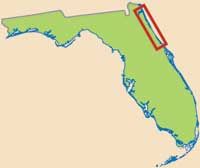
The A1A Coastal Highway offers travelers the opportunity to dip their toes in the ocean off the Florida coast. With miles and miles of white sand beaches, you will have plenty of space to spread out with buckets and blankets. You can charter a fishing boat and dangle a line for flounder, snook, whiting, snapper, or blues, just to name a few varieties. Or swing your feet over the pier while fishing from land.
If you don't want to get your feet wet but still enjoy watching the ocean, try jogging, biking, roller blading, or strolling along the 19-mile path from Marineland to the Volusia County line. Or stash your binoculars in your beach bag for views of wildlife and birds.
Advertisement
Explore the wonders of the Florida coastline, as the Spanish explorers did almost 450 years ago.
Archaeological Qualities of the A1A Coastal Highway
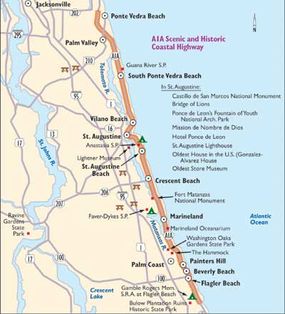
More than 75 archaeological sites have been formally recognized and recorded along this stretch of road, excluding the downtown St. Augustine area, which has hundreds more sites. Middens -- mounds or deposits containing shells, animal bones, and other refuse, indicating sites of prehistoric human settlements -- are located on publicly owned sites found in the River to Sea Preserve at Marineland, Washington Oaks Gardens State Park, Anastasia State Park, and Guana River State Park. Additionally, fossils have been found along the Intracoastal Waterway. These remains include mastodons, woolly mammoths, sloths, camels, birds, fish, beavers, snakes, tapirs, and deer.
Cultural Qualities of the A1A Coastal Highway
The A1A Coastal Highway stretches through an area whose culture is heavily influenced by its natural surroundings. The scenic ocean landscape certainly plays a part in this influence, as do the scents and sounds of the coast, giving shape to the art, architecture, and even livelihood of the inhabitants along the byway. This maritime culture is expressed in the byway's attractions, architecture, art, and festivals.
Historical Qualities of the A1A Coastal Highway
The byway traverses an area full of colorful history. Glorious hotels still stand as memorials to Henry Flagler's influence on tourism. Remnants of vast plantations allow views into the life of General Joseph Hernandez, Florida's first delegate to the U.S. Congress.
In 1565, Spanish Admiral Don Pedro Menendez de Aviles arrived with 600 soldiers and settlers, founding the city of St. Augustine at the site of the Timucuan Indian village of Seloy. He and the settlers successfully colonized Florida, 42 years before the English colony at Jamestown, Virginia, and 55 years before the arrival of the Pilgrims at Plymouth Rock, Massachusetts. St. Augustine today contains more than 2,500 historic structures.
Natural Qualities of the A1A Coastal Highway
The Atlantic Ocean, clean bays, rivers, marshes, and pristine beaches and dunes all play an important role in forming the natural qualities of the byway. These environmental characteristics have shaped and inspired the culture and livelihood of the area's inhabitants. Presently, numerous state parks and estuaries offer exceptional interaction with nature. Boardwalks and trails offer opportunities to explore the areas without damaging the habitat. Likewise, kayaking tours are available on the Intracoastal Waterway for an intimate look at the aquatic ecosystem.
The combination and variation of habitats in the area are home to an impressive variety of wildlife. More than 50 species of endangered or threatened animals live in the area, such as the gopher tortoise and tricolor heron. More than 300 species of fish and wildlife have been recorded in the area's reserves. Manatees, oystercatchers, green and leatherback turtles, dolphins, and even migrating northern right whales can be observed. The corridor has even been included on the Great Florida Birding Trail by the Florida Fish and Wildlife Conservation Commission. The marshes along the byway are home to their own unique animal life. Typical animals include marsh snails, fiddler crabs, otters, wading birds, ospreys, manatees, marsh wrens, alligators, turtles, great blue herons, and American egrets.
Recreational Qualities of the A1A Coastal Highway
There are miles and miles of beaches along the byway. Recreationalists can participate in beachcombing, sunning, beach strolling, and even beach driving; Crescent Beach allows motor vehicles on its expansive beaches.
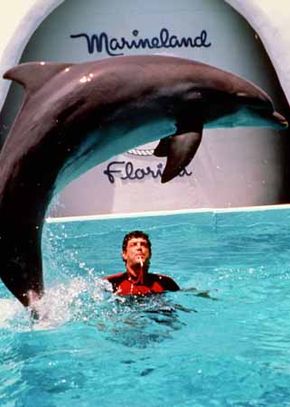
With the ocean on one side and a river on the other along much of the byway, there is plenty of room for aquatic activities, including surfing, swimming, fishing, and boating, with free public boat launches such as the one found at Bing's Landing. Kayaking and canoeing are also popular activities, whether in the river or in shallow lakes and canals in the area. Other popular aquatic activities include sailing, taking a scenic cruise, and scuba diving. The traveler can even observe or interact with dolphins and sea turtles near the town of Marineland.
Find more useful information related to Florida's A1A Coastal Highway:
Find more useful information related to Florida's A1A Coastal Highway:
- Ponte Vedra Beach, St. Augustine, Marineland: Find out what there is to do in these cities along the A1A Coastal Highway.
- Scenic Drives: Are you interested in scenic drives beyond Florida? Here are more than 100 scenic drives throughout the United States.
- How to Drive Economically: Fuel economy is a major concern when you're on a driving trip. Learn how to get better gas mileage.
Advertisement