
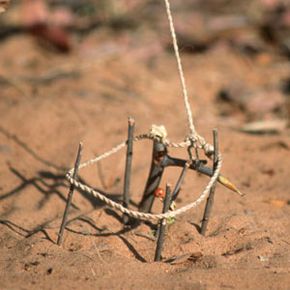
If your idea of animal trapping is a cardboard box propped up with a stick attached to a string, it's probably time for you to stop watching cartoons and learn how real trapping works.
Animal trapping, whether for food or fur, has been a part of human culture for thousands of years. It involves the use of a trap to catch an animal in its natural habitat, and can be applied to anything as small as a mouse and as large as a bear. During the Ice Age, people trapped for fur pelts to protect from the cold. Today, people trap for survival, sustenance and money. Trapping is also sometimes used for animal control -- think of the common mousetrap.
Advertisement
Sport trapping is now carefully regulated by individual state agencies in the United States, with various laws determining how, when and what people can trap. There are also still some modern-day fur trappers in existence, but since most fur is taken from animals raised on farms, their numbers are dwindling.
There are five basic types of traps that trappers can choose from: body gripping traps, snares, foothold traps, cages and glue traps. Though trapping requires a bit of work and patience up front, it can be very efficient and safe for the trapper because he doesn't need to be in the immediate vicinity of the animal until after it's been caught.
However, for all of trapping's benefits, it has its detractors. Animals that get a limb caught in a trap's jaws can sit in pain, and some animals have even been known to chew their limbs off to escape traps.
Before you get both sides of the great trapping debate, it's important to get a little background behind this legal, regulated outdoor activity. Click on the next page to start at the beginning -- the history of trapping.
Advertisement