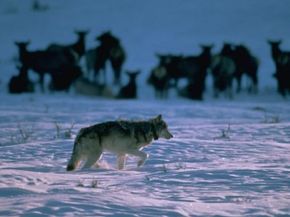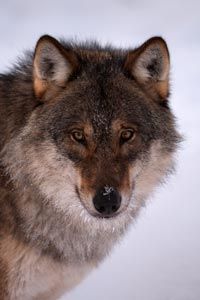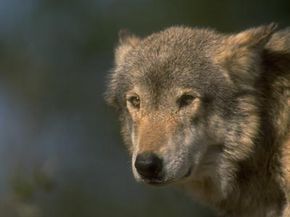
For an animal that probably only cares about survival, eating elk and surviving some more, the wolf has found itself in the middle of one of the most heated environmental debates in modern times. While people don't tear each other's throats out when the subject comes up, pro- and anti-wolf groups are passionate over whether or not humans should hunt wolves, and for many different reasons.
It wasn't always so. Before Europeans began arriving in the New World, about 250,000 wolves inhabited much of what we now know as the lower 48 states [source: Defenders of Wildlife]. Most Native American cultures respected wolves as mysterious and powerful spirits and valued their hunting skills and ability to bond as a pack.
Advertisement
As human populations in the West increased and ranchers needed more space for livestock, perceptions toward the wolf changed for the worse. Myths and legends of wolves as bloodthirsty animals made people afraid of wolves, and any attacks on cattle or sheep (which were typically gruesome) didn't help their case. The wolf quickly became an enemy to people whose sustenance depended on the survival of their livestock, and the state of Montana began offering bounty rewards for wolf hides as early as 1884 [source: Montana Fish, Wildlife & Park].
After trapping, shooting and poisoning by farmers and ranchers essentially pushed the gray wolf out of the northwest United States for most of the 20th century, wolves were placed on the endangered species list in 1974. Although it became officially illegal to hunt and kill wolves in the lower 48 United States, there weren't many to protect after they were systematically hunted out of the country -- the majority of gray wolves inhabited either Canada or Alaska.
Finally, beginning in 1995, U.S. Fish and Wildlife Service (FWS) officials took 66 wolves from Canada and reintroduced them into Yellowstone National Park. Within a little more than a decade, the wolf population in Idaho, Montana and Wyoming grew at a remarkable rate to about 2,000. Now that wolves have reached what some believe to be a healthy population, does this mean it's OK for hunters to dust off their rifles?
Advertisement