Some of us have childhood memories involving Grandpa, a cane pole and a jaunty, red-and-white bobber. Whether or not you share that recollection, you still might like to learn a few tips about catching bluegill. In this article, you'll learn where to find the best catch, the best baits and lures, how to fly fish for bluegill, and even how to clean them.
One reason many of us started fishing for bluegill as kids is that they'll bite on nearly anything and are found in abundance in many regions. That plentitude means there aren't limits on size or daily catch in some states. Bluegills -- also known as sunfish, bream, perch or plumb granny -- are related to largemouth bass. So if you know a good spot for bass, it's likely you'll find bluegills there as well.
Advertisement
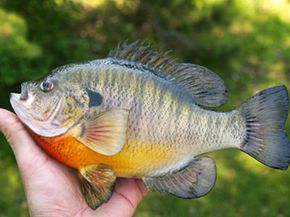
Usually, bluegill have dark olive green backs with lighter sides. Each side has between five and nine dark vertical bars. Sometimes, the cheeks and opercles (gill covers) are vivid blue, hence the name bluegill. Factors affecting bluegill color include the fish's age, sex and the color of the water it's in. Bluegills don't get much bigger than 8 inches (20.3 centimeters) or weigh more than 6 ounces (170 grams) [source: Indiana Department of Natural Resources].
Where, oh where, has my little bluegill gone? Read on to discover their likely habitats.
Advertisement