Crab Boat Equipment and Safety Measures

life on crab boat
Erik Hill/Anchorage Daily News/Getty Images
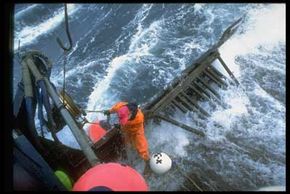
Crab fisherman snags the buoy line for the crab pot as waves crash into him.

There are two objectives in crab fishing: Return to port safely and make as much m­oney as possible. As you might guess, these objectives frequently conflict, and crew members wind up in harm's way.

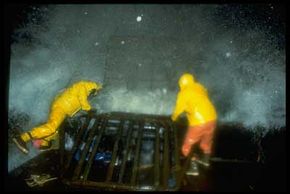
In 1988, a law to increase the safety of the crab fishing crew was enacted. The law's aim was to reduce the two greatest dangers of the icy Alaskan waters: hypothermia and drowning. The best way for a crab fisherman to stay alive is to stay out of the water. Some crab fishing fatalities are preventable. Ships overloaded with equipment or crab are unstable and may capsize­. Other accidents are unavoidable. Heavy seas may sweep crew members off the deck, or a deckhand may lose footing while releasing a crab pot. Regardless of the reason for the accident, having the proper equipment on board can be a lifesaver.

Survival Suits
The Coast Guard requires survival suits for each crew member aboard a crab fishing vessel. These suits help keep crew members alive in the event a boat capsizes or otherwise encounters trouble. The neoprene suits provide floatation support as well as thermal protection. They're oversized so that crew members can put them on quickly. However, crew members don't wear the suits at all times. In the event of an emergency, the crew members are expected to suit up and abandon ship in less than one minute. Although the suits won't keep the wearer safe for extended periods in frigid and rough seas, they increase survival time to several hours.

­The 1988 law requires that all boats carry life rafts, survival suits, a fire extinguisher and alerting and locating equipment. The U.S. Coast Guard has the authority to check for compliance and often performs safety checks. During these checks, the equipment is examined, and the Coast Guard may also observe pot loading procedures to check the training level of the crew.

The locating equipment, or emergency position indicating radio beacon (EPIRB), enables the Coast Guard to help a ship that's in trouble. All commercial fishing vessels are required to carry an EPIRB. These battery operated radios transmit a signal that is picked up by satellite. Once activated, they continue to send out a signal for 48 hours. When the captain or boat owner purchases an EPIRB, it is registered. The registration information, including the name, address and phone number of the boat's owner, as well as a description of the boat and a shore side contact phone number are transmitted via satellite to the Coast Guard.

No surprise, the heavy lifting and hazardous toil of crab fishing leads to injuries. Because the ships are far from a hospital, the crew must be relatively self-sufficient when medical care is required.

The fishing vessel contains a medical kit, but this kit is more comprehensive than a traditional first aid kit. It includes some prescription drugs, such as morphine and antibiotics, as well materials to stitch wounds. The captain receives specialized training in the use of the first aid gear when he or she gains a captain's license. The captain can complete training through the American Red Cross's Standard First-Aid Care and Emergency Care Class, its Multimedia Standard First Aid course, or a Coast Guard-approved training class. If the injury requires more extensive medical care, the Coast Guard will evacuate the injured crew member to port. Dutch Harbor facilities are not extensive, and severe injuries may require a flight to Anchorage.

Now that we know how captains and Coast Guard keep fishermen safe on board, let's find out what other supplies the ship carries.